

Termite Damage in NC: Warning Signs Every Homeowner Should Know
Termites may be small, but the damage they cause can become a major concern for North Carolina homeowners. These insects often remain hidden beneath the soil, behind walls, inside crawlspaces, and within wooden building materials. By the time visible damage appears, termites may have already been active for an extended period.
Understanding the signs of termite damage in NC can help homeowners respond before the problem becomes more extensive. Although termites are a natural part of the environment, they become destructive when they gain access to homes, decks, garages, sheds, and other wooden structures.
North Carolina’s climate, seasonal rainfall, humidity, wooded landscapes, and abundance of crawlspace homes can create conditions that support subterranean termite activity. Homeowners should know what termite damage looks like, where it commonly occurs, and when it is time to schedule a professional termite inspection from A-1 Pest Control.
Why Is Termite Damage in NC a Serious Concern?
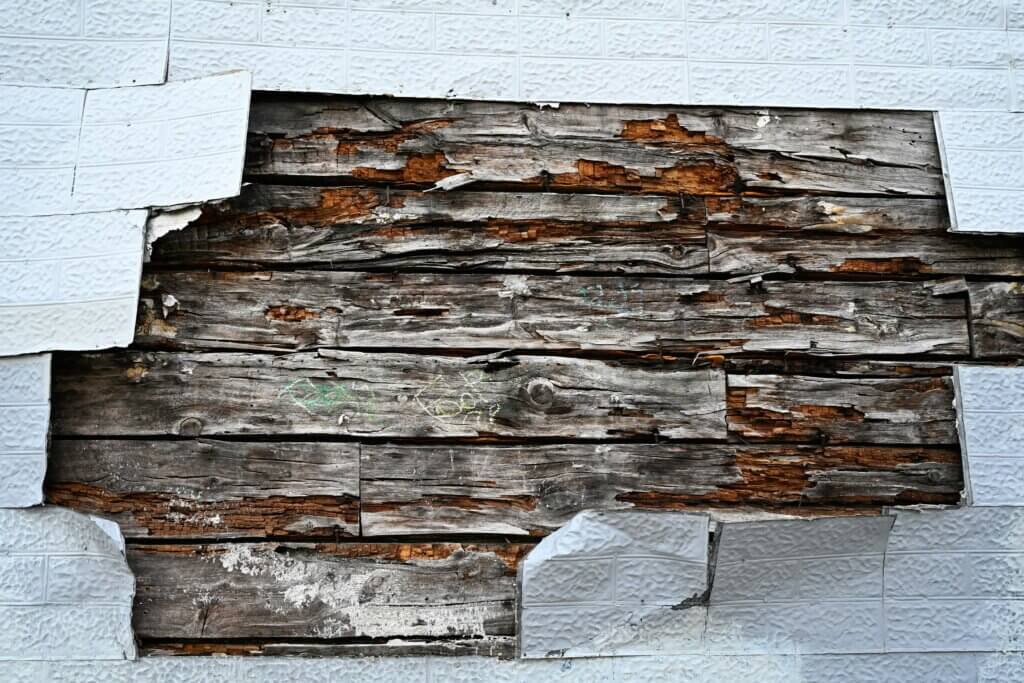
Termite damage is concerning because it often develops out of sight. Subterranean termites, the most common termites affecting North Carolina homes, usually live underground. Worker termites leave the colony to search for cellulose-based materials, including wood and other building products.
Unlike pests that are easy to see moving across a floor or countertop, termites may feed inside wooden structures without creating obvious surface damage. A piece of wood can appear relatively normal from the outside while becoming hollow or weakened internally.
North Carolina is home to multiple native subterranean termite species. Depending on the weather and the species involved, termite swarmers may appear from late winter through the fall. Swarming activity is particularly common on warm days following rain.
Finding swarmers outside does not always mean a home is infested. However, finding winged termites or piles of discarded wings inside the house can indicate that a mature colony is active within or close to the structure.
Because termite activity can remain concealed, prevention and early detection are important parts of protecting a North Carolina property.
What Causes Termite Damage in North Carolina Homes?
Termite damage occurs when termites locate a reliable food source and gain access to a structure. Because subterranean termites generally travel between underground colonies and wooden materials, they often enter through foundation cracks, gaps around utility lines, crawlspaces, porches, or areas where wood touches the soil.
Several property conditions can increase the risk of termite activity.
Excess Moisture
Leaking pipes, clogged gutters, poor drainage, standing water, and damp crawlspaces can create conditions that attract termites. Moisture may also soften wooden materials, making them more vulnerable to both decay and pest activity.
Wood-to-Soil Contact
Porch posts, deck supports, siding, door frames, and other wooden components that directly touch the soil can provide termites with a concealed route into a structure.
Foundation Openings
Termites can move through extremely small cracks and gaps. Openings around plumbing lines, expansion joints, foundation walls, and utility penetrations may provide access to a home.
Wood Stored Near the House
Firewood, lumber, tree stumps, cardboard, and construction debris can provide termites with food and shelter. When these materials are placed against a house, they may bring termite activity closer to the foundation.
Mulch and Dense Landscaping
Mulch can help retain soil moisture around a foundation. Thick mulch, heavy vegetation, and shrubs growing against the house can also make it more difficult to inspect the foundation for termite activity.
Reducing these conditions cannot guarantee that termites will stay away, but it can make a property less attractive and easier to inspect.
What Are the Early Signs of Termite Damage in NC?
The signs of termite damage in NC are not always obvious. Homeowners may notice evidence of termites before they see the insects themselves.
Common warning signs include:
Mud Tubes
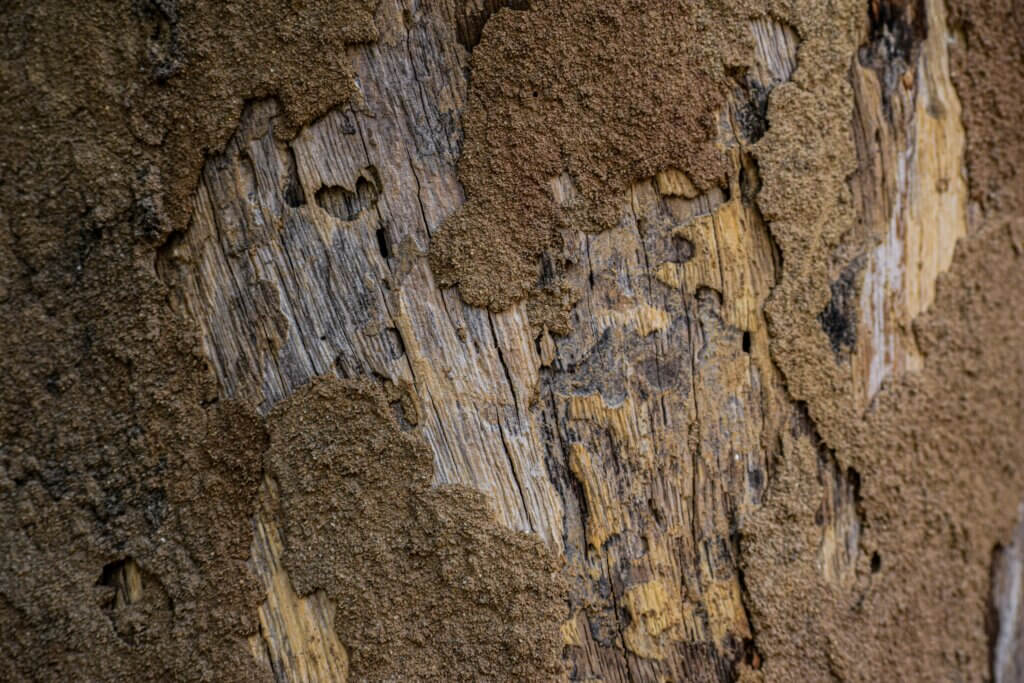
Subterranean termites construct narrow mud tubes that help them travel while maintaining the moisture they need. These tubes may appear along foundation walls, crawlspace supports, floor joists, pipes, or other protected surfaces.
Mud tubes are often about the width of a pencil or drinking straw. Breaking open a tube may reveal active termites, but an empty tube does not necessarily mean that the infestation is gone. Termites may rebuild the tube or use another route.
Hollow-Sounding Wood
Wood damaged by termites may sound hollow when gently tapped. In advanced cases, a screwdriver or similar object may easily break through the damaged surface.
Homeowners should avoid aggressively probing structural components, as doing so may worsen existing damage or create a safety concern.
Blistered or Uneven Surfaces
Termite activity beneath flooring, trim, paint, or wallpaper may create bubbling, blistering, or uneven areas. These symptoms can also be caused by moisture, plumbing problems, or wood decay, so a professional inspection is needed to identify the source.
Discarded Wings
After termite swarmers leave a colony, they shed their wings. Small piles of matching wings near windows, doors, vents, lights, or other entry points can be a warning sign.
Winged Termites Indoors
Termite swarmers are sometimes confused with flying ants. Termites generally have straight antennae, broad waists, and two pairs of wings that are approximately equal in length. Flying ants have bent antennae, narrow waists, and front wings that are longer than their rear wings.
Damaged or Crumbling Wood
Baseboards, window frames, door frames, flooring, and other wooden materials may appear cracked, weakened, or layered. Termites often consume the softer portions of wood while leaving thin outer surfaces behind.
Where Should Homeowners Look for Termite Damage?
Termites can affect many parts of a home, but certain areas deserve additional attention.
Crawlspaces are especially important because they may contain exposed wood, elevated humidity, plumbing lines, and limited airflow. Homeowners should also pay attention to basement walls, foundation edges, support beams, sill plates, and floor joists.
Other areas to examine include:
- Wooden decks and porches
- Steps and railings
- Door and window frames
- Garages and storage buildings
- Areas near bathrooms, kitchens, and laundry rooms
- Spaces around water heaters and plumbing fixtures
- Wooden fencing attached to the house
- Rooms with stained, warped, or uneven flooring
An informal visual check can help a homeowner notice changes, but it is not a replacement for a professional termite inspection. Pest management professionals know where to look for concealed entry points, damaged materials, and conditions that may support termite activity.
How Quickly Can Termite Damage Become Serious?
There is no single timeline for termite damage. The rate of damage can depend on the size and maturity of the colony, the number of termites foraging near the home, environmental conditions, the location of the infestation, and the materials being attacked.
A termite colony does not usually destroy a structurally sound house overnight. However, that does not mean homeowners should delay taking action. The primary danger is that termite activity can continue for months or years before the damage becomes visible.
Termite colonies may also use multiple entry points and feed in more than one location. The damaged baseboard a homeowner notices may represent only one portion of a larger problem.
The earlier termite activity is identified, the sooner a treatment plan can be developed. Early action may help limit additional damage and reduce the number of repairs the property requires.
Can Termite Damage Be Mistaken for Other Problems?
Termite damage can resemble several other household problems.
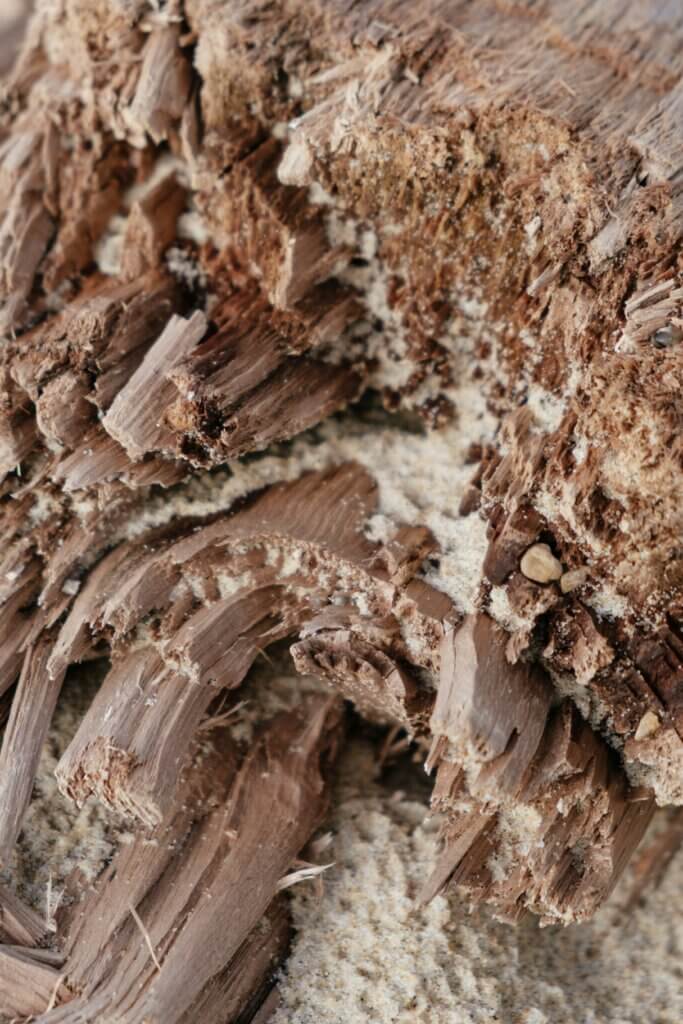
Carpenter ants, for example, can damage wood while creating nesting areas. Unlike termites, carpenter ants do not eat wood. They excavate it and often leave behind sawdust-like material known as frass.
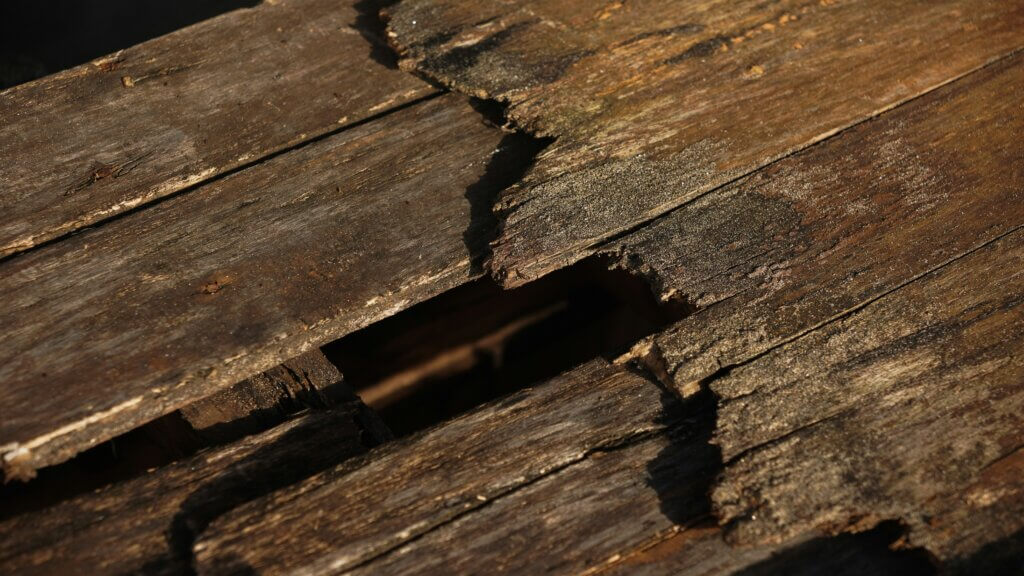
Wood rot can also cause flooring, beams, and trim to become soft or weakened. Rot is generally associated with fungi and persistent moisture rather than termite feeding. However, moisture-damaged areas can sometimes experience both decay and termite activity.
Powderpost beetles and other wood-destroying insects may leave small exit holes or powdery debris. Plumbing leaks, roof damage, settling foundations, and high indoor humidity can also cause bubbling paint, stained walls, warped floors, or damaged wood.
Because several issues can create similar symptoms, homeowners should avoid relying only on internet photos or attempting to diagnose the problem themselves. A licensed professional can determine whether the damage involves termites, another wood-destroying insect, moisture, decay, or a combination of problems.
What Should You Do When You Find Possible Termite Damage?
Finding possible termite damage in NC can be stressful, but homeowners should avoid panicking or immediately disturbing the affected area.
Do not tear apart damaged wood, spray household insecticide into a wall, or remove mud tubes before the property has been inspected. Disturbing termites may cause them to retreat temporarily or change their travel route, making their activity more difficult to evaluate.
Instead, document what you found. Take photographs, note the location, and pay attention to any nearby moisture problems or damaged building materials.
The next step is to schedule a professional termite inspection. During the inspection, a pest management professional may examine the foundation, crawlspace, exterior walls, accessible structural components, moisture-prone areas, and other potential points of entry.
When active termites are discovered, the recommended treatment will depend on the property, the location of the activity, and the severity of the problem. Structural repairs may also be necessary when termites have significantly weakened wooden components.
How Can North Carolina Homeowners Prevent Termite Damage?
Termite prevention begins with making a home less attractive and reducing concealed access points.
Homeowners can lower their risk by repairing plumbing leaks, directing water away from the foundation, cleaning gutters, and addressing standing water. Crawlspace moisture problems should also be evaluated rather than ignored.
Keep firewood, lumber, cardboard, and wood debris away from the exterior walls. Whenever possible, elevate stored firewood off the soil and avoid placing it directly beside the house.
Maintain visible space between soil or mulch and wooden siding. Deck posts, porch supports, and other wooden components should not provide an uninterrupted connection between the ground and the home.
Trim shrubs and vegetation so that the foundation remains visible and accessible. Remove dead stumps, buried wood, and construction debris from around the property.
Homeowners should also inspect exterior faucets, air-conditioning drainage lines, roof edges, and crawlspace vents for conditions that may lead to persistent moisture.
These maintenance steps are valuable, but termites can still enter well-maintained properties. Routine professional inspections and ongoing termite protection provide another important layer of defense.
Why Is a Professional Termite Inspection Important?
A professional termite inspection goes beyond looking for visible insects. Trained technicians evaluate both active termite evidence and the conditions that may allow an infestation to develop.
An inspection may identify mud tubes, damaged wood, swarmers, foundation openings, moisture issues, wood-to-soil contact, and other areas of concern. The findings can help determine whether the property requires active treatment, preventive protection, repairs, or moisture correction.
Professional inspections are also important because termite control products must be applied correctly. Structural pest control work performed for hire in North Carolina must be completed by appropriately licensed professionals or employees working under licensed supervision.
When choosing a termite control provider, homeowners should ask what the inspection includes, which treatment method is recommended, how the system will be monitored, and whether ongoing protection is available.
How Can A-1 Pest Control Help Protect Your Home?
A-1 Pest Control helps homeowners throughout Western North Carolina identify termite activity, evaluate potential damage, and create a termite control plan based on the property’s needs.
Our termite services begin with a thorough inspection. We look for active termites, visible damage, mud tubes, entry points, moisture concerns, and other conditions that may place the property at risk.
Depending on the inspection findings, our pest management professionals may recommend a termite baiting system, a targeted liquid treatment, or another professional solution. A-1 Pest Control uses established termite control options designed to address subterranean termites and support lasting property protection.
Our team has protected North Carolina homes since 1966. We understand the termite pressures that affect properties in Lenoir, Hickory, Mooresville, West Jefferson, Blowing Rock, Asheville, Hendersonville, and surrounding communities.
Do not wait until visible termite damage in NC becomes a major repair project. Whether you have noticed discarded wings, mud tubes, damaged wood, or simply have not had your property inspected recently, A-1 Pest Control is ready to help.
Contact A-1 Pest Control or give us a call today to schedule a free termite inspection and learn more about dependable termite treatment and prevention options for your North Carolina home.