

Types of Ants in North Carolina: An A-1 Pest Control Guide
North Carolina is home to a diverse array of ant species, many of which frequently find their way into residential and commercial properties. Understanding the types of ants in North Carolina that might invade your space is the first step toward effective pest management. This guide from A-1 Pest Control will help you identify common ant species, understand their habits, and know when to seek professional help to protect your home or business.
From tiny sugar ants to destructive carpenter ants, each species presents unique challenges. Knowing what you're dealing with can make a significant difference in how quickly and effectively you can address an infestation, saving you time, money, and potential structural damage.
What Are the Most Common Ant Species in North Carolina Homes?
The most common ant species that invade North Carolina homes include odorous house ants, carpenter ants, pavement ants, fire ants, and acrobat ants. These ants are primarily attracted to food, water, and shelter, often entering through cracks in foundations, gaps around windows, or utility openings. Their presence typically indicates a nearby colony seeking resources within your property.
Why Do Ants Invade North Carolina Homes?
Ants invade homes and businesses in North Carolina primarily seeking food, water, and shelter, especially during changes in weather like heavy rains or droughts. They are highly motivated by accessible food sources, even small crumbs or spills, and can establish colonies surprisingly quickly once inside. Understanding these motivations is key to preventing infestations and maintaining a pest-free environment.
Which Ant Species Should North Carolina Homeowners Be Aware Of?
North Carolina homeowners should be particularly aware of several common ant species due to their prevalence and potential for damage or nuisance. Here's a closer look at some of the most frequently encountered ants:
Odorous House Ants (Tapinoma sessile)
- Appearance: Small (1/16 to 1/8 inch), dark brown to black.
- Distinctive Feature: When crushed, they emit a rotten coconut-like odor, hence their name.
- Habits: These ants often forage in trails and nest both indoors (near water sources like kitchens and bathrooms) and outdoors (under rocks, logs, or in mulch). They are attracted to sweets. If you've ever found a line of tiny ants marching across your kitchen counter, there's a good chance they were odorous house ants.
- Impact: While not destructive, large colonies can be a significant nuisance, contaminating food.
Carpenter Ants (Camponotus spp.)
- Appearance: Larger than most ants (1/4 to 1/2 inch), typically black, red and black, or dark brown.
- Distinctive Feature: They excavate tunnels in wood to build nests, often leaving behind sawdust-like material called frass. Unlike termites, they don't eat wood; they just tunnel through it.
- Habits: Carpenter ants prefer moist, decaying wood but can also nest in sound wood. They are often found in wall voids, insulation, and around windows or doors.
- Impact: Can cause significant structural damage to homes over time if left unaddressed. Early detection is crucial.
Pavement Ants (Tetramorium caespitum)
- Appearance: Small (1/8 inch), dark brown to black.
- Distinctive Feature: Known for nesting under sidewalks, driveways, and building foundations, pushing up small mounds of soil.
- Habits: They often enter homes through cracks in the foundation or slab, foraging for a variety of foods, including sweets, grease, and pet food.
- Impact: Primarily a nuisance pest, though large colonies can be persistent.
Fire Ants (Solenopsis invicta)
- Appearance: Small (1/8 to 1/4 inch), reddish-brown.
- Distinctive Feature: Known for their aggressive stinging behavior and characteristic dome-shaped mounds in yards, which lack a central opening.
- Habits: Primarily an outdoor pest, but they can enter homes, especially during floods or very dry conditions. They are a significant problem across much of North Carolina.
- Impact: Their stings are painful and can cause allergic reactions in some individuals. You can learn more about managing these pests in our article, Are You Ready For Fire Ant Season?
Acrobat Ants (Crematogaster spp.)
- Appearance: Small (1/8 inch), light brown to black, heart-shaped abdomen.
- Distinctive Feature: When disturbed, they raise their abdomen over their head, resembling an acrobat.
- Habits: Often nest in moist or damaged wood, foam insulation, and hollow spaces. They are attracted to honeydew from aphids.
- Impact: Can damage wood by excavating nests, similar to carpenter ants, and can be a nuisance indoors.
Ghost Ants (Tapinoma melanocephalum)
- Appearance: Extremely small (1/16 inch), pale legs and abdomen with a dark head and thorax, making them appear almost translucent.
- Distinctive Feature: Their nearly invisible appearance makes them difficult to spot until an infestation is well established.
- Habits: Prefer warm, moist environments and often nest indoors in wall voids, behind baseboards, or in potted plants. They are attracted to sweets. Find out more about ghost ants.
- Impact: Primarily a nuisance pest, but their small size allows them to access almost any food source, leading to contamination.
How Can You Identify Ants in Your North Carolina Home?
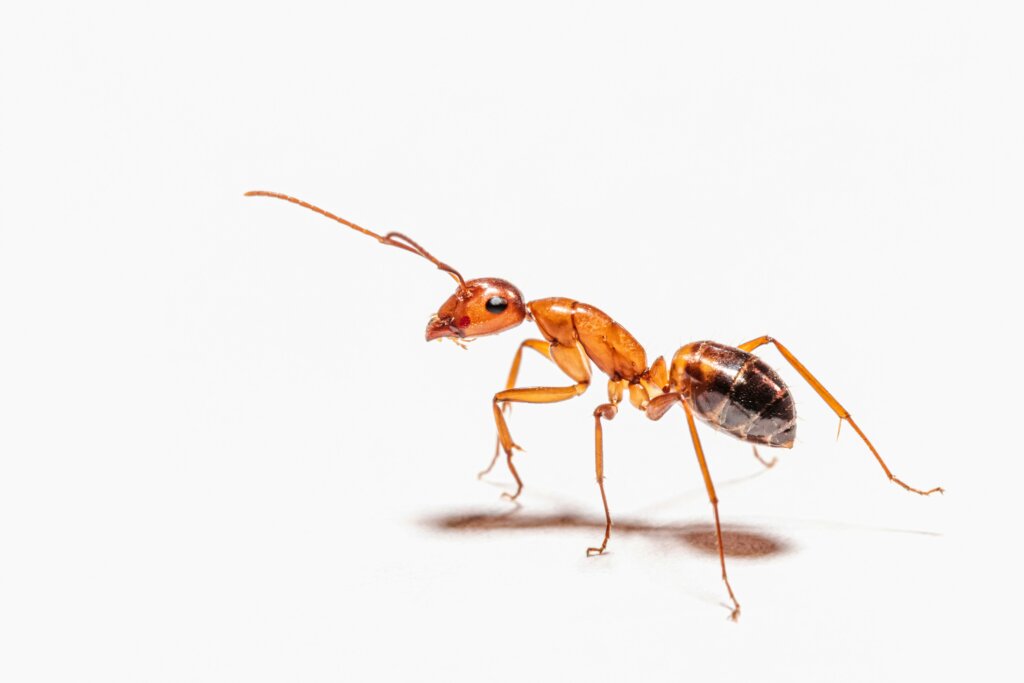
Accurate ant identification is crucial for effective treatment. Here’s what to look for:
- Size and Color: Observe their size (from tiny to large) and color (black, brown, red, or combinations).
- Antennae: Note the shape of their antennae – are they elbowed or straight?
- Waist: Look at their "waist" (pedicel) between the thorax and abdomen. Does it have one or two nodes (segments)?
- Behavior: Watch how they move. Do they march in trails, wander randomly, or raise their abdomen when disturbed?
- Nest Location: Where are you seeing them? Indoors (kitchen, bathroom), outdoors (pavement, woodpiles), or emerging from specific areas?
- Frass/Damage: For carpenter ants, look for piles of wood shavings or tunneling in wood.
If you're unsure, collecting a sample and bringing it to a pest control professional can help with positive identification.
When Should You Seek Professional Ant Control in North Carolina?
While DIY solutions can sometimes deter small ant incursions, there are clear signs it's time to call in the experts at A-1 Pest Control:
- Persistent Infestations: If ants keep returning despite your best efforts, it indicates a larger, possibly hidden, colony.
- Large Numbers: Seeing a significant number of ants regularly suggests a well-established colony nearby.
- Presence of Destructive Ants: If you suspect carpenter ants, immediate professional intervention is necessary to prevent structural damage.
- Unknown Species: When you can't identify the type of ant, a professional can correctly identify the species and apply the most effective treatment.
- Safety Concerns: Dealing with fire ants, especially if you have children or pets, warrants professional handling due to their painful stings.
Professional pest control technicians have the knowledge, tools, and specialized products to effectively locate, identify, and eliminate ant colonies, addressing the root cause of the problem, not just the visible foragers.
What Does A-1 Pest Control Do for Ant Infestations?
At A-1 Pest Control, our approach to ant infestations in North Carolina involves a thorough, multi-step process designed for effective and lasting results:
- Thorough Inspection: Our trained technicians will conduct a detailed inspection of your property to identify the ant species, locate nesting sites, and determine entry points and attractants.
- Customized Treatment Plan: Based on our findings, we develop a tailored treatment plan. This might include baits, liquid treatments, dusting, or a combination, strategically applied to target the specific ant species and colony.
- Exterior Perimeter Treatment: We often focus on creating a protective barrier around your home's exterior to prevent ants from entering in the first place.
- Interior Spot Treatments: For indoor infestations, we use targeted, low-impact treatments in areas where ants are active, always prioritizing the safety of your family and pets.
- Colony Elimination: Our goal is not just to kill the ants you see but to eliminate the entire colony, including the queen, for long-term control.
- Preventative Recommendations: We provide expert advice on how to make your home less attractive to ants in the future, such as sealing entry points, managing food storage, and addressing moisture issues.
- Follow-Up Services: Depending on the severity of the infestation, follow-up visits may be scheduled to ensure the problem is fully resolved.
We're committed to providing comprehensive pest control solutions across North Carolina, addressing everything from ants to hornet control.
Frequently Asked Questions
How do I know if I have carpenter ants or termites?
Carpenter ants excavate wood to create nests, leaving behind smooth tunnels and frass (wood shavings). Termites, on the other hand, consume wood, creating muddy tunnels and leaving behind mud tubes. Carpenter ants are typically larger, have elbowed antennae, and a narrow waist, while termites have straight antennae and a broad waist.
Can ants cause structural damage to my home?
Yes, certain ant species, particularly carpenter ants, can cause significant structural damage to homes. They tunnel through wood to build their nests, weakening wooden structures over time. While other ants are mainly nuisance pests, addressing any ant infestation promptly is important to prevent potential long-term issues.
What attracts ants to my North Carolina home?
Ants are primarily attracted to sources of food, water, and shelter. Common attractants include spilled food, crumbs, sugary drinks, pet food, leaky pipes, moisture accumulation, and accessible entry points like cracks in foundations or gaps around windows and doors. They often seek refuge indoors during extreme weather changes.
Are ant treatments safe for pets and children?
At A-1 Pest Control, we prioritize the safety of your family and pets. We use professional-grade products and application methods that are highly effective against ants while minimizing exposure to non-target organisms. Our technicians are trained to apply treatments safely and will provide specific instructions regarding re-entry times or precautions for pets and children.
How long does it take to get rid of an ant infestation?
The time it takes to eliminate an ant infestation varies depending on the species, the size of the colony, and the extent of the infestation. Smaller, less established colonies might be resolved quickly, often within a few days to a week. Larger or more stubborn infestations, especially with species like carpenter ants, might require several treatments and follow-up visits over a few weeks to ensure complete colony eradication.
What can I do to prevent ants from coming back?
To prevent ants from returning, maintain good sanitation by cleaning up spills promptly and storing food in airtight containers. Seal cracks and crevices in your home's foundation, walls, and around windows and doors. Address moisture issues like leaky pipes, and keep your yard free of debris, woodpiles, and overgrown vegetation that can harbor ant colonies.
Get Help With Ant Problems Today
Dealing with ant infestations in North Carolina can be a frustrating and ongoing battle. Whether you're facing a nuisance like odorous house ants or a destructive threat like carpenter ants, the experienced team at A-1 Pest Control is ready to help. We understand the specific challenges presented by local ant species and offer targeted, effective solutions to protect your home and peace of mind.
Don't let ants take over your property. For professional pest control services you can trust, reach out to us today. Contact A-1 Pest Control to schedule an inspection or learn more about our ant control programs in North Carolina. You can also explore more helpful tips and information on our blog.